 By MyJobAlly

A realistic, hour-by-hour plan for the invitation that arrives late, with Nigerian details such as traffic, power cuts, fake interviews and panel rounds built in.
Last updated: 15 November 2026
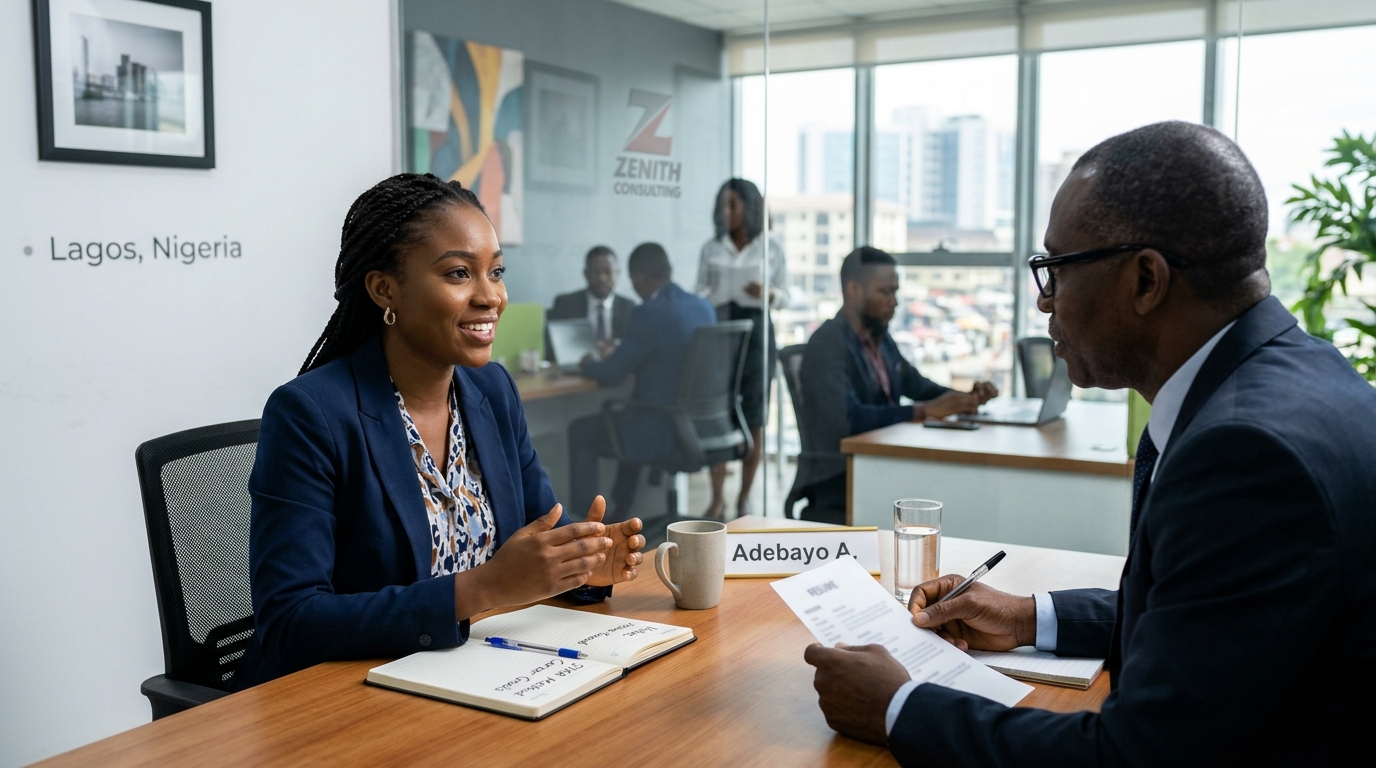
The email lands at 4 p.m. on Monday: interview at 10 a.m. on Tuesday. Your stomach drops. You have not touched your CV in months, you know nothing about the company, and half the internet is telling you that great candidates prepare for weeks.
They do not need to. One focused day can take you from unprepared to genuinely convincing, as long as you spend it on the right things. Research on interview coaching backs this up: in an experiment with 144 participants, those who received more comprehensive coaching earned higher interview ratings, and the gains came partly through knowing what to say and how to structure it. Preparation works because it is specific, not because it is long.
This guide gives you a plan you can follow whether you have 24 hours or 12.
The Four Things That Matter Most When Time Is Short
If you remember nothing else, protect these four:
- Know the role. Understand what the job actually needs, line by line.
- Know the employer. Have ten facts and two sharp reasons for wanting to work there.
- Have five stories ready. Real examples from your work, school or NYSC year, with numbers.
- Sort the logistics. Route, time, documents, power and data. Late or flustered candidates lose offers they should have won.
Everything else is a bonus.
Hour by Hour: Your One-Day Plan
First 30 Minutes: Confirm and Verify
Before you prepare a single answer, make sure the interview is real and you know exactly what to expect.
- Reply to confirm, and ask for the address, the format (one-on-one, panel, test, virtual), the names of interviewers and the expected duration.
- Check the company. The Corporate Affairs Commission offers a free public search at search.cac.gov.ng, and a guide from Legit.ng explains how to look up a company by name or RC number. Registration does not prove an employer is honest, but a company that does not appear at all is a warning sign.
- Look for scam signals. BusinessDay reports that some fraudsters stage fake interviews in rented offices and hotels and that no credible employer charges application or interview fees. PenCom also warned about a recruitment scam in April 2026. Never pay, and never share bank details.
- Tell someone where you are going.
Hours 1 to 2: Decode the Job
Copy the job description into a document and highlight the five things the employer cares about most: skills, tools, outcomes. Beside each, write your best proof in one line.
Example: the advert says “manage customer complaints.” Your proof: “Handled about 40 complaints a week at [place] and cut repeat complaints by a third.”
This exercise is the backbone of your day. It tells you which stories to prepare and which skills to emphasise. If the advert is vague, note what you would ask at the interview.
Hours 2 to 4: Research the Employer
Aim for ten facts, not an essay. Look at:
- The company website: what it sells, who it serves, its values and recent announcements.
- Recent news: a quick search for the company name plus the current year.
- For listed companies, annual results and analysis. Nairametrics regularly reports on pay and performance at large listed firms.
- Social media pages and the profiles of your interviewers, if you know their names.
- Competitors, so you can speak about the market.
Then write two sentences on why you want to work there. Be specific: a product, a market, a challenge. “You are a leading company” tells them nothing.
While you are researching, find a salary range. Nigerian pay varies hugely by employer, and a Risevest report, covered by Techeconomy, found that 73 percent of Nigerians earn below ₦500,000 a month. Use our underpaid guide to set a sensible range you can state calmly.
Hours 4 to 6: Build Five Stories
Most behavioural questions can be answered with a handful of well-chosen stories. Write each one in four lines:
- Situation: where and when.
- Task: what you were responsible for.
- Action: what you did, in the first person.
- Result: the outcome, with a number if you have one.
Choose stories that show: a result you are proud of, a mistake you fixed, a disagreement handled well, working under pressure, and learning something fast. If you are early in your career, use NYSC projects, school leadership roles, volunteering or freelance work. Employers who use structured interviews, where each candidate gets the same questions and answers are scored, are using what researchers found to be the best-ranked selection method, which means your specific examples will be compared directly with other candidates’.
Hours 6 to 8: Rehearse Out Loud
Reading answers silently is not preparation. Say them aloud, with a timer, until each one fits in 60 to 90 seconds. Cover these six:
- Tell me about yourself. Present role, one or two highlights, why this job next.
- Why do you want this job and this company? Your two sentences from research.
- Why are you leaving, or why did you leave? Honest, brief, forward-looking.
- What are your strengths and your weakness? One real strength with proof, one real weakness with the fix.
- What are your salary expectations? A researched range, framed around the scope of the role.
- Do you have any questions for us? Prepare five. See below.
For tougher questions, our guide to the top 10 mistakes people make during interviews is a good checklist of what to avoid. BusinessDay also advises preparing at least three questions about the company rather than leading with pay.
Five questions worth asking:
- What would success look like in the first six months?
- How is performance measured, and how often is pay reviewed?
- What are the biggest challenges the team faces?
- How did people in this role progress?
- What does the next stage of the process look like?
Hours 8 to 9: Run One Full Mock Interview
Ask a friend, sibling or colleague to interrogate you for 20 minutes, using the job description. Record it on your phone if you can. Watch it once, and fix the two biggest problems, usually rambling and missing numbers.
No one available? An AI chatbot can play interviewer. Paste in the job description and ask for five questions and feedback on your answers, but keep confidential details out. NITDA has warned staff against entering personal or confidential information into public AI tools, so use generic descriptions of past work.
This step matters more than it seems. A meta-analysis found that interview anxiety has a moderate negative link with interview performance, and nothing lowers nerves like hearing your own answers once before the real thing.
Hours 9 to 10: Logistics, the Nigerian Way
This is where many good candidates lose points, so treat it as part of the preparation, not an afterthought.
Getting there
- Check the route and the time of day you will travel. The Danne Institute of Research estimates that people employed in Lagos spend an average of 2.21 hours daily in traffic.
- Plan to arrive 30 minutes early, and have a backup route and a ride-hailing app ready.
- Keep cash, a charged phone and a power bank. Arrive at the area early and wait nearby if you are ahead of schedule.
What to carry
- Several copies of your CV, printed neatly.
- Originals and copies of your certificates, NYSC discharge or exemption certificate, and a valid ID.
- Passport photographs, a pen and a notebook.
- Your list of questions, a bottle of water and tissue.
What to wear
- Clean, neat, professional clothing that fits. Dress one level above the employer’s normal dress code. Iron it and lay it out tonight.
If the interview is virtual
Power and data can sink a good candidate. The national grid collapsed twice within five days in January 2026, according to AllAfrica, and BusinessDay reported that it failed nine times in 2024.
- Charge your devices and your power bank, and have a backup power source ready.
- Buy extra data and keep a second connection, such as a hotspot from another phone.
- Test the link, camera and microphone, and join five minutes early.
- Choose a quiet spot with plain background and good light, and tell the household not to interrupt.
- Have your CV and notes open, and a phone number to call if the connection fails.
- Expect identity checks. Gartner has reported that 6 percent of 3,000 candidates admitted to interview fraud, so many employers now verify who is on the call. Keep a valid ID handy.
Evening: Visualise, Then Stop
Spend five minutes picturing the interview going well: arriving calmly, answering the first question clearly, finishing with a good handshake. This is not wishful thinking. A 2003 study cited in Scientific American found that applicants who practised mental imagery were less stressed and received better evaluations.
Then finish. Pack your bag, set two alarms, eat properly and go to bed early. Sleep will do more for your performance than another hour of cramming.
The Morning of the Interview
- Wake early, eat something light and avoid heavy new foods.
- Skim your five stories and your research notes. Do not read anything new.
- Leave earlier than you planned, and silence your phone before you enter the building.
- Be polite to everyone from the security guard to the receptionist, since they will all have opinions.
- Use the waiting time to breathe slowly and reread your top three selling points.
- In the room, smile, make eye contact, listen to the full question, pause for a moment and then answer.
If You Only Have Three Hours
When the notice is even shorter, cut ruthlessly:
- Verify the interview and confirm the address and time (15 minutes).
- Decode the job description and match your top three proofs (30 minutes).
- Learn ten facts about the employer (30 minutes).
- Prepare three stories with numbers (45 minutes).
- Rehearse “tell me about yourself” and “why this job” aloud (30 minutes).
- Sort logistics and clothes (30 minutes).
Skip the extras and stay calm.
Panel Interviews, Tests and Assessment Centres
Many Nigerian employers use more than a one-on-one chat. An HR expert interviewed by Nairametrics notes that many job seekers are unfamiliar with assessment centres and scenario-based interviews. If you are told to expect a panel, group exercise or test:
- Panel: make eye contact with everyone, not only the person who asked. Address the most senior person last in your closing.
- Group exercise: contribute early, listen, build on others’ points and summarise.
- Written or aptitude test: practise a few numerical and verbal questions tonight, and bring a pen, a calculator if allowed and a watch.
- Case or live task: think aloud, state your assumptions and structure your answer.
Seven Mistakes to Avoid on a Tight Schedule
- Memorising scripts. You will sound stiff, and one unexpected question will derail you.
- Ignoring the job description. It tells you what to emphasise.
- Skipping the mock interview. It is the highest-value hour of your day.
- Leading with salary. Let the employer raise it, unless asked.
- Lying. If you invent an answer, you will struggle to defend it. Our guide on why some employees choose to be fired rather than resign shows how to explain a difficult exit honestly.
- Arriving flustered. Lateness is hard to recover from.
- Forgetting the follow-up. A short thank-you can set you apart.
After the Interview
Write down what you were asked and how you answered, while it is fresh. Send a short thank-you within 24 hours that mentions something specific from the conversation. If the timeline passes with no word, follow up politely, and read why recruiters ghost you so you know what is normal. Line up your referees using how to request a job reference.
Make Your CV Match the Story You Tell
If your CV is out of date, fix it before you rehearse, because interviewers will ask about what is on the page. Use MyJobAlly’s Optimize Your CV tool, and read what recruiters look for in a CV and how to write a resume that makes recruiters call you first. If you are short on formal experience, the rise of skills-based hiring explains how to show skills through projects and results, and why sales skill keeps you employable shows how to present your value clearly. Browse verified roles on MyJobAlly for your next interview, and keep practising with why you should interview for jobs you don’t want.
Quick Answers
Can I really prepare for an interview in one day? Yes, if you focus on the role, the employer, five stories and logistics, and rehearse aloud at least once.
What should I do first? Verify that the interview is genuine and confirm the time, place and format.
How many hours should I spend practising? About two to three hours of spoken rehearsal, including one full mock interview, is enough for most people.
What if the interview is virtual? Test your link, camera and audio, and plan for power and data backup. Join five minutes early with your ID ready.
What if I do not have much experience? Use NYSC projects, school roles, volunteering and freelance work, and describe what you did and the result.
Sources and limits: this guide draws on the Journal of Occupational and Organizational Psychology (Tross and Maurer), the Canadian Journal of Behavioural Science, Scientific American, HumRRO’s summary of selection research, Legit.ng, BusinessDay, Nairametrics, Techeconomy, AllAfrica, HR Dive (reporting Gartner) and NITDA’s advisory as reported by Nairametrics, current as of 15 November 2026. Several studies were conducted outside Nigeria, and the one-day schedule, checklists and sample wording are our suggestions rather than a tested programme. This article is general information, not career advice.